Premise
Modern implant dentistry has fundamentally transformed how dental practitioners treat tooth loss, moving beyond traditional removable prosthetics toward biomechanically integrated permanent solutions. Whether an individual loses an isolated tooth to localized physical trauma or faces total dental failure across an arch due to progressive periodontal deterioration, titanium dental implants provide the gold standard in functional restoration. However, selecting between single tooth implants and full-arch rehabilitation systems like All-on-4 is not simply a matter of counting missing teeth. It requires an in-depth clinical evaluation of jawbone morphology, occlusal load dynamics, long-term periodontal health, treatment timelines, and overall lifestyle goals.
Introduction
Losing one or more natural teeth can be an overwhelming experience. Beyond the immediate aesthetic change to your smile, missing teeth disrupt foundational oral mechanics: chewing efficiency drops, remaining teeth migrate out of position, and the underlying alveolar jawbone gradually resorbs due to the absence of natural biting stimulation. For residents across Simcoe County seeking lasting restorative solutions, modern implant dentistry offers lifelike stability and lifelong oral health benefits that traditional dentures and bridges cannot match.
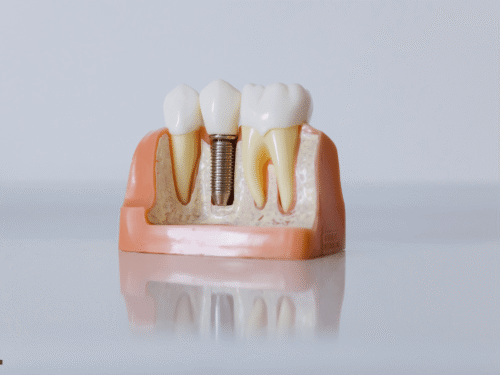
Two of the most prominent implant methodologies available today are single tooth implants and the All-on-4 full-arch treatment concept. While both rely on biocompatible titanium fixtures that fuse directly with living jawbone through osseointegration, they address fundamentally different oral health presentations. A single implant meticulously replaces one missing unit from root to crown without touching adjacent healthy dentition. In contrast, the All-on-4 approach is a full-arch restorative technique that anchors an entire upper or lower bridge of permanent teeth on just four strategically angled implant posts.
Navigating the choice between these procedures requires understanding how each treatment addresses structural anatomy, bone availability, surgical complexity, and long-term daily maintenance. Below are ten foundational points comparing single tooth implants and All-on-4 restorations to help guide your path to lasting oral health.
10 Critical Comparisons: Single Tooth Implants vs. All-on-4
Clinical Scope and the Extent of Tooth Loss
The baseline consideration distinguishing single implants from All-on-4 is the overall pattern of missing or failing dentition within your mouth. Single tooth dental implants are designed for localized tooth replacement. If you have lost an individual tooth due to sports trauma, root fracture, or localized decay—while the neighbouring teeth remain sound, healthy, and stable—an individual implant fixture is the ideal clinical choice. Conversely, the All-on-4 protocol is engineered for full-arch edentulism or terminal dentition, where remaining teeth across an entire arch are severely compromised by extensive periodontitis, mobile roots, or widespread structural decay. Rather than placing a dozen separate posts, All-on-4 replaces all 10 to 14 teeth on a single arch simultaneously, delivering comprehensive rehabilitation where isolated restorations would prove unfeasible.
Bone Preservation: Localized Stimulation vs. Full-Arch Basal Engagement
Whenever a tooth root is extracted or lost, the alveolar bone ridge that once anchored it begins an irreversible process of resorption, shrinking both vertically and horizontally. A single dental implant mimics the natural tooth root, transmitting physiological biting forces directly into the surrounding localized trabecular bone to halt local bone atrophy completely. In full-arch situations, prolonged tooth loss often leads to extensive bone resorption, particularly in the posterior molar regions where the maxillary sinuses expand or the mandibular nerve limits available bone height. The All-on-4 protocol bypasses this anatomical obstacle by placing two anterior vertical implants and two posterior implants tilted up to 45 degrees. This tilt engages dense, quality anterior bone, providing rigid bicortical anchorage without requiring complex sinus lifts or massive bone grafting procedures.
Impact on Adjacent Healthy Dentition
Prior to modern dental implants, the traditional standard for replacing a single missing tooth was a three-unit fixed bridge. Placing a traditional dental bridge requires grinding down and capping the two adjacent healthy virgin teeth to serve as support abutments, irreversibly stripping away pristine protective enamel. A single tooth implant completely eliminates this drawback; it stands independently within its own osteotomy site, allowing neighbouring teeth to remain completely untouched and structurally intact. With the All-on-4 technique, the focus shifts away from preserving isolated natural teeth to removing remaining severely compromised or mobile teeth, creating an entirely fresh, stable plane of occlusion that restores full chewing balance across the whole mouth.
Surgical Complexity and the Need for Pre-Surgical Bone Grafting
Bone volume requirements differ significantly between these two treatment modalities. When placing an individual implant into an area where a tooth has been absent for an extended period, localized socket grafting, ridge augmentation, or sinus elevation is frequently required to build sufficient vertical and horizontal bone dimensions before implant insertion. If bone volume is deficient, treatment times can lengthen by several months while the graft consolidates. All-on-4 surgery was developed specifically to minimize or eliminate the need for extensive bone grafting. By taking advantage of tilted posterior fixtures, clinicians maximize contact with available native bone in the anterior jaw, significantly reducing both surgical morbidity and pre-treatment grafting delays.
Treatment Timelines and the “Teeth-in-a-Day” Concept
Procedural timelines represent a major difference between traditional single implants and full-arch reconstructions. A conventional single tooth implant typically follows a phased treatment protocol: the post is surgically placed and covered beneath the gum tissue for an osseointegration period of 3 to 6 months before an abutment and custom porcelain crown are attached. During this healing window, patients may wear a temporary removable flipper or clear retainer. In contrast, the All-on-4 procedure is well known for immediate functional loading—often described as “Teeth-in-a-Day.” Because the four implants achieve rigid multi-unit cross-arch splinting upon placement, a fixed, rigid provisional acrylic bridge can usually be attached within 24 hours of surgery, allowing patients to walk out with non-removable teeth immediately.
Occlusal Force Distribution and Chewing Capacity
Both treatment options dramatically outperform traditional removable prosthetics when it comes to masticatory force. Removable full dentures sit on soft mucosal gum tissue, providing only 15% to 20% of natural chewing capacity and frequently slipping or pinching under pressure. An individual dental implant restores approximately 95% to 100% of natural bite force, operating exactly like an organic tooth root anchored into solid bone. All-on-4 restorations restore roughly 80% to 90% of natural bite capacity by transferring heavy chewing forces directly into the underlying jawbone through rigid titanium connections. Patients with All-on-4 bridges can once again enjoy crunchy vegetables, lean meats, and fibrous fruits without fear of appliance slippage, palate coverage, or gum irritation.
Daily Oral Hygiene and Maintenance Routines
Day-to-day care for a single tooth implant mirrors the home-care routine of your natural dentition. You brush twice daily using a soft-bristled brush and non-abrasive fluoride toothpaste, and you floss around the prosthetic crown using conventional dental floss or an interdental brush. Caring for an All-on-4 prosthetic bridge requires a dedicated routine. Because the fixed prosthetic bridge spans the entire arch and rests against the underlying gum tissue, food debris and plaque biofilms can accumulate beneath the prosthetic framework. Patients must incorporate specialized hygiene tools into their daily regimen, including water flossers (oral irrigators), super floss with stiffened threaders, and angled sulcus brushes to maintain pristine peri-implant tissue health and prevent peri-implant diseases.
Aesthetic Outcomes and Facial Soft-Tissue Support
Aesthetic considerations depend heavily on the amount of underlying structural tissue that has been lost. A single dental implant excels at replicating the natural emergence profile of an individual tooth as it emerges from the gumline, perfectly matching the shade, translucency, and contour of neighbouring enamel for an invisible restoration. In long-term edentulous patients, however, substantial bone and soft tissue shrinkage often causes the lower third of the face to collapse, leading to sunken lips, hollow cheeks, and deep facial folds. The All-on-4 prosthetic bridge can be designed with a discreet, pink acrylic or composite base that replicates lost gum architecture. This built-in support lifts the upper lip and restores proper facial height, providing noticeable rejuvenation to the patient’s entire profile.
Cost Comparisons and Upfront Financial Planning
Understanding the financial framework of each option is vital for making an informed long-term healthcare investment. A single dental implant entails an upfront cost covering the surgical placement, custom titanium or zirconia abutment, and laboratory-crafted ceramic crown. When an individual has only one or two isolated missing teeth, single implants are exceptionally cost-effective. However, if a patient is missing 8 to 12 teeth across an arch, placing individual implants for every missing tooth becomes clinically impractical and cost-prohibitive. In these extensive situations, the All-on-4 method offers significant financial efficiency. By relying on four strategically positioned posts to support a continuous 12-to-14-unit bridge, All-on-4 drastically reduces individual fixture costs, surgical fees, and auxiliary grafting expenses.
Long-Term Prognosis, Success Rates, and Failure Mitigation
Dental implants demonstrate one of the highest clinical success rates across all surgical fields, consistently exceeding 95% to 98% over decades of documented dental research. If a single dental implant experiences biological complications—such as failing to integrate or developing peri-implantitis—the localized site can be cleaned, debrided, grafted, and re-implanted down the road without affecting the rest of the mouth. In an All-on-4 system, the failure of a single post places structural stress on the remaining three implants, potentially compromising the stability of the entire bridge. For this reason, All-on-4 procedures require precise 3D cone-beam computed tomography (CBCT) planning, guided surgical placement, and diligent clinical follow-ups to ensure long-term structural viability.
Conclusion
Both single dental implants and the All-on-4 full-arch treatment concept provide durable, bone-preserving solutions that restore function and natural beauty to your smile. The right choice does not come down to which treatment is “superior” in the abstract, but rather which clinical approach addresses your personal dental anatomy, tooth loss history, and overall oral health objectives.
If you have a strong, healthy dental arch with an isolated missing tooth caused by trauma or localized decay, a single tooth implant is the premier conservative option to restore your bite while protecting neighbouring teeth. On the other hand, if you are struggling with failing dentition across an entire jaw, loose removable dentures, or widespread bone loss, the All-on-4 system delivers a life-changing full-arch transformation in as little as a single day.
Consulting with an experienced implant team equipped with 3D diagnostic imaging is the most effective first step toward choosing the treatment that will restore your bite, revitalize your smile, and preserve your jawbone for decades to come.
Reclaim Your Bite with Rainbow Dental Centre
Are you ready to explore your tooth replacement options and discover whether a single dental implant or full-arch All-on-4 rehabilitation is right for your smile? The experienced dental team at Rainbow Dental Centre in Angus, Ontario, provides comprehensive implant consultations, advanced digital diagnostics, and compassionate, personalized care to help you smile and chew with complete confidence.
- Name: Rainbow Dental Centre
- Address: 1 Water Street, Angus, Ontario L0M 1B0
- Phone: 705 424 0873
- Email: angusrainbowdental@gmail.com
- Website: angusrainbowdental.ca
Engineered for stability, designed for life: Restoring your smile’s strength, function, and natural brilliance.
-
A1. The implant procedure is completed comfortably under local anaesthesia, which freezes the treatment site and ensures you do not feel pain during surgery. Many patients report that placing a dental implant involves less post-operative discomfort than a standard tooth extraction. Over-the-counter pain medications and cold compresses are usually all that is needed to manage minor tenderness over the initial two to three days.